Table of contents
Content included in this page
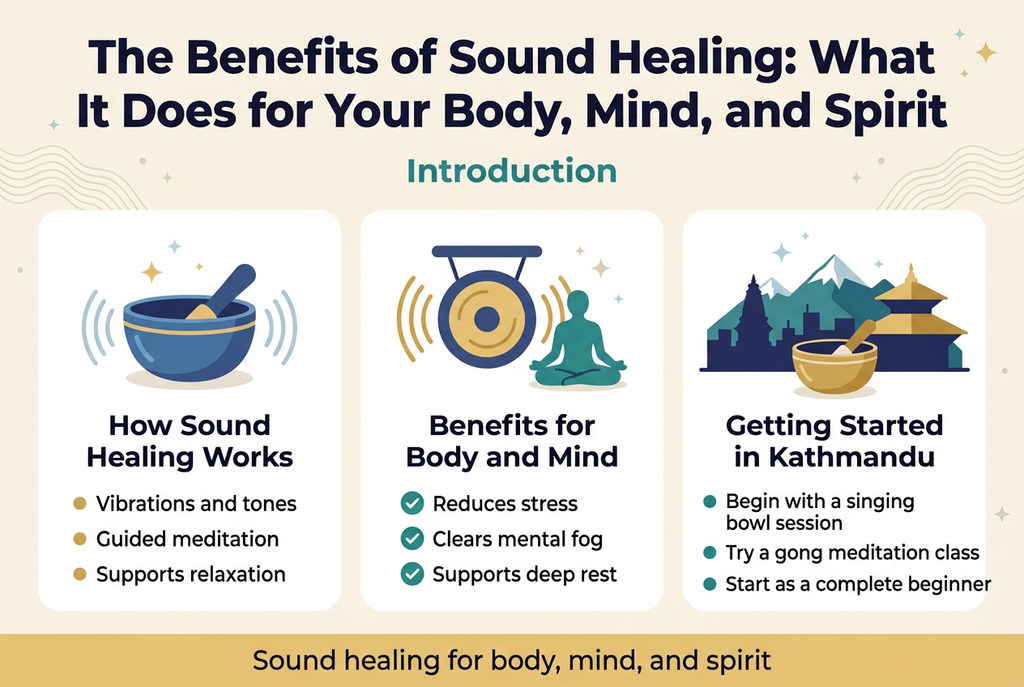
If you’ve been feeling stressed, burnt out, or just mentally foggy, sound healing might be exactly what you’ve been missing. This practice has been around for thousands of years, and right now it’s having a well-deserved moment, especially here in Kathmandu, where more people are discovering what a singing bowl or a deep gong meditation session can actually do for them.
This guide is for anyone curious about sound therapy in Kathmandu, from total beginners who’ve never stepped inside a Gong House to wellness regulars looking to go deeper with their practice.
Here’s what we’ll walk through together:
- How sound healing actually works to your mind and soul
- The physical and mental benefits of sound healing
- How to get started with sound healing in Kathmandu, even if you have zero experience
What Is Sound Healing and How Does It Work

The Ancient Roots and Modern Revival of Sound Healing
Sound healing is an ancient complementary practice that uses specific tones, frequencies, and acoustic vibrations from instruments to promote deep relaxation, reduce stress, and restore mental and physical balance
Ancient Egyptians chanted vowel sounds in healing temples. Indigenous cultures across every continent used drums and vocal toning to restore balance. In Nepal and Tibet, singing bowls have been used for centuries in spiritual and healing rituals, a tradition that’s very much alive today in places like Gong House and other sound healing centers in Kathmandu.
Key Instruments and Techniques Used in Sound Therapy
Sound therapy in Kathmandu and around the world draws from a rich toolkit of instruments and methods:
| Instrument/Technique | How It’s Used |
| Singing Bowls | Struck or rimmed to produce resonant tones that wash over the body |
| Gongs | Used in gong meditation to create layered, immersive soundscapes |
| Tuning Forks | Applied directly to the body or held near the ears for precise frequency work |
| Drums | Rhythmic beating used to shift brainwave states |
| Voice & Chanting | Humming, toning, and mantra work to create internal resonance |
Gong meditation in Kathmandu has gained particular popularity, with group sessions offering a deeply immersive experience where waves of sound guide participants into a relaxed, meditative state. You can find more products and can choose what is best for you in our house.
How Sound Frequencies Interact with the Body and Mind
Your body isn’t just made of flesh and bone , it’s vibrational. Every organ, cell, and tissue has its own natural frequency. When stress, illness, or emotional tension throws those frequencies off, you feel it.
Sound healing works through a few key mechanisms:
- Entrainment — your brainwaves naturally sync to external rhythms, shifting from stressed beta waves to calm alpha or theta states
- Resonance — specific frequencies can vibrate in harmony with different parts of the body, encouraging release and relaxation
- Nervous system regulation — slow, sustained tones activate the parasympathetic nervous system, signaling your body that it’s safe to relax
- Vibroacoustic stimulation — low-frequency sounds create physical vibrations that are literally felt in the body, loosening tension at a muscular level
Physical Health Benefits of Sound Healing

Reduces Chronic Pain and Tension in the Body
Sound healing works directly on the body’s nervous system, shifting it out of a stress-driven “fight or flight” state and into deep rest. Vibrations from instruments like singing bowls penetrate muscle tissue, loosening tightness and reducing the perception of pain. People dealing with conditions like fibromyalgia, migraines, and lower back pain have reported meaningful relief after consistent sessions. The resonance essentially gives your body permission to let go of tension it’s been holding for years.
Lowers Blood Pressure and Supports Heart Health
When sound slows your breathing and quiets your mind, your cardiovascular system responds. Heart rate drops, blood vessels relax, and blood pressure follows. Research on sound therapy shows measurable reductions in systolic blood pressure after even a single session. Gong meditation, practiced regularly at places like Gong House in Kathmandu, creates a sustained relaxation response that benefits the heart over time, not just in the moment.
Boosts Immune Function and Accelerates Recovery
Chronic stress suppresses immunity. Sound healing directly counteracts this by lowering cortisol levels and activating the parasympathetic nervous system — the body’s natural recovery mode. When stress hormones drop, your immune cells can do their job properly. Many practitioners of sound healing in Kathmandu notice they recover faster from illness and feel more physically resilient overall. The body heals best when it’s calm, and sound gives it that environment.
Here’s a quick look at the physical benefits:
| Physical Benefit | How Sound Healing Helps |
| Pain relief | Vibrations reduce muscle tension and nerve sensitivity |
| Heart health | Slows heart rate and lowers blood pressure |
| Immune support | Reduces cortisol, activating recovery processes |
| Better sleep | Calms the nervous system before rest |
Improves Sleep Quality and Combats Insomnia
Poor sleep is often rooted in an overactive mind and a nervous system that won’t wind down. Sound therapy, whether through a live singing bowl session or recorded soundscapes guides brainwaves from beta (alert) to theta and delta states, which are the frequencies associated with deep sleep. People who attend sound therapy in Kathmandu often report falling asleep faster and waking up feeling genuinely rested, sometimes after years of struggling with insomnia.
Mental and Emotional Benefits of Sound Healing
Melts Away Stress and Calms the Nervous System
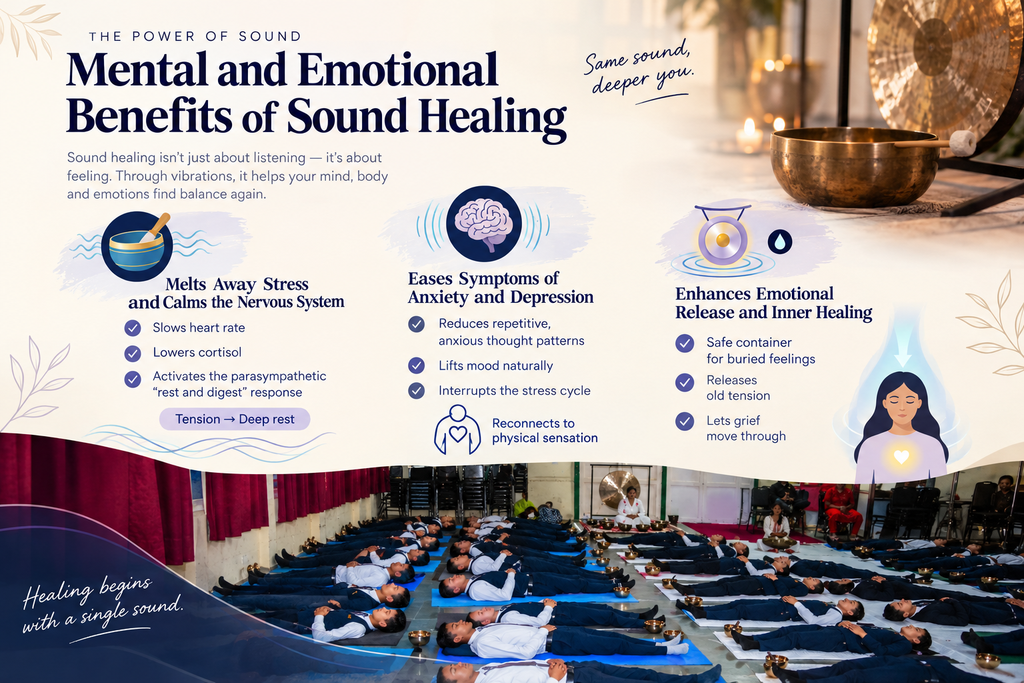
When life feels overwhelming, sound healing works like a reset button for your nervous system. The vibrations from a singing bowl or gong wash over your body and gently shift it from a state of tension into deep rest. This happens because sound directly influences your autonomic nervous system, slowing your heart rate, lowering cortisol levels, and activating the parasympathetic “rest and digest” response.
Many people who attend gong meditation in Kathmandu describe walking in feeling wound up and walking out feeling like they’ve had a full night’s sleep. That’s not coincidence — it’s your biology responding to resonant sound frequencies doing exactly what they’re designed to do.
Eases Symptoms of Anxiety and Depression
Sound therapy creates measurable shifts in brainwave activity. Sustained tones guide the brain away from high-frequency beta waves (linked to worry and overthinking) toward calmer alpha and theta states. This is where anxiety loosens its grip.
For people dealing with depression, the experience of simply feeling something — vibration in the chest, warmth spreading through the body — can reconnect them to physical sensation they’ve gone numb to. Sound therapy in Kathmandu is increasingly being explored alongside other wellness practices for exactly this reason.
Key ways sound healing supports mental health:
- Reduces repetitive, anxious thought patterns by anchoring attention to present-moment sound
- Lifts mood naturally through the release of dopamine and serotonin triggered by pleasurable sound
- Interrupts the stress cycle before it spirals into chronic anxiety or depressive episodes
Helps You Release Emotions and Feel Lighter
Sometimes feelings stay with us for a long time, even when we don’t talk about them. Sound healing gives those feelings a safe space to come up and move through. You don’t have to explain anything or figure it all out. You just lie down and listen.
The deep hum of a singing bowl or gong can feel like it reaches places that words can’t. Some people cry during a session, and it often isn’t from sadness. It can feel more like relief, as if something heavy is finally let go. At Gong House, this is welcome. Tears, deep sighs, or quiet stillness are all fine. If you cry, nothing is wrong with you. You are simply giving yourself room to let go.
Cognitive and Spiritual Benefits of Sound Healing
Helps You Focus and Think Clearly
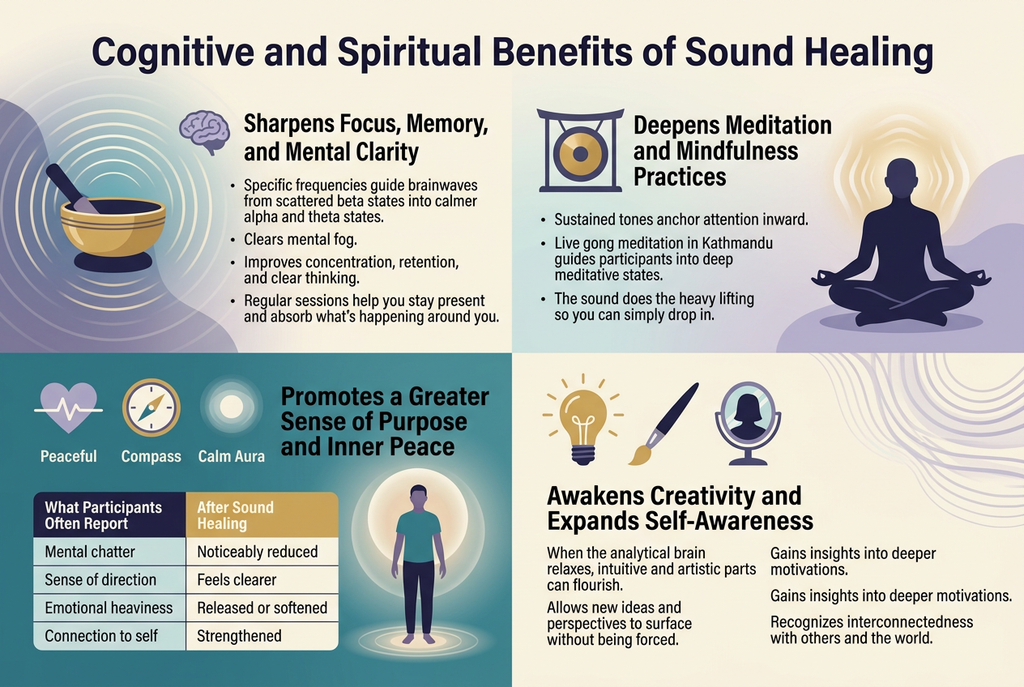
Ever feel like your mind is full of noise? Sound can help with that. The steady tone of a singing bowl gives your mind something calm to follow, and your thoughts start to slow down. Many people say they feel less foggy afterward and find it easier to focus and remember things. Come back often, and staying present gets easier.
Makes Meditation Easier
Sitting still and quieting the mind is hard, especially at the start. A gong or singing bowl gives your attention a place to rest. You just listen, and the sound gently pulls you inward. At Gong House in Kathmandu, we use live gong meditation to help people settle into a deep, calm state. You don’t have to try hard. Let the sound carry you.
Brings Calm and a Sense of Purpose
After a good sound healing session, many people say they feel lighter and more grounded. Some also feel clearer about what matters in their life. It’s hard to explain until you feel it yourself. That is one reason sound healing in Kathmandu is growing: people want real quiet in a busy, noisy world, and the calm often stays with them long after the session ends.
| What Participants Often Report | After Sound Healing |
| Mental chatter | Noticeably reduced |
| Sense of direction | Feels clearer |
| Emotional heaviness | Released or softened |
| Connection to self | Strengthened |
Awakens Creativity and Expands Self-Awareness
When your mind is stressed, new ideas have little room to show up. Sound can help clear some of that space. As the tones of a singing bowl fade in and out, your thinking slows down and your mind begins to wander in a good way. Many people say ideas come more freely after a session. Beyond creativity, there’s a deeper layer, you start noticing patterns in your thinking and behavior that were previously invisible. Sound becomes a mirror. It doesn’t just relax you; it reveals you. That expanded self-awareness is one of the most lasting and meaningful gifts the practice offers.
How to Get Started with Sound Healing
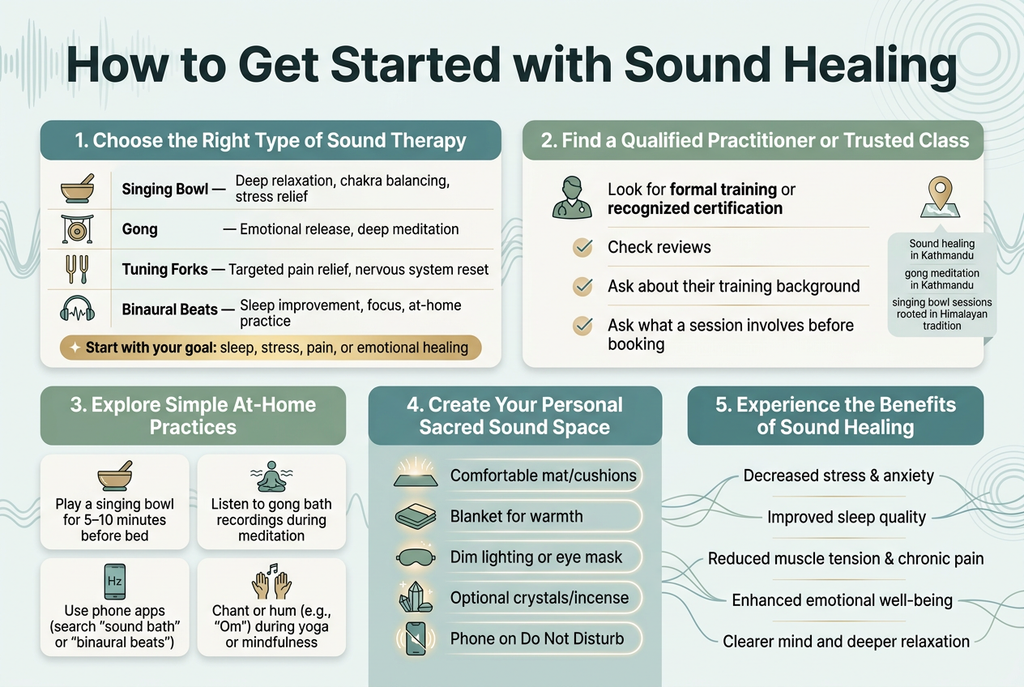
Choose the Right Type of Sound Therapy for Your Needs
Different sound healing tools serve different purposes. Here’s a quick guide:
| Tool | Best For |
| Singing Bowl | Deep relaxation, chakra balancing, stress relief |
| Gong | Emotional release, deep meditation |
| Tuning Forks | Targeted pain relief, nervous system reset |
| Binaural Beats | Sleep improvement, focus, at-home practice |
Start by identifying your goal, sleep, stress, pain, or emotional healing, then pick accordingly. Singing bowls are a great all-rounder for beginners.
Find a Qualified Practitioner or Trusted Class
Not all sound healers are equal. Look for someone with formal training in sound therapy or a recognized certification. If you’re in Nepal, exploring sound healing in Kathmandu is surprisingly easy, the city has a growing community of skilled practitioners offering gong meditation in Kathmandu and singing bowl sessions rooted in Himalayan tradition.
Check reviews, ask about their training background, and don’t hesitate to ask what a session involves before booking. A good practitioner will always be happy to explain and we singingbowlandgonghouse.com offer you the best.
Explore Simple At-Home Sound Healing Practices
You don’t need a studio to start. Try these:
- Play a singing bowl for 5–10 minutes before bed
- Listen to gong bath recordings during meditation
- Use binaural beats with headphones while working or resting
- Hum or tone, your own voice is a healing instrument
Even 10 minutes a day can create a noticeable shift in how you feel.
What to Expect During Your First Sound Healing Session
Sessions typically last 45–90 minutes. You’ll lie down comfortably while the practitioner plays instruments around or near your body. Most people feel deeply relaxed, some feel emotional, and others simply drift into a sleep-like state.
Don’t worry if you don’t feel anything dramatic, the effects often show up hours later as better sleep, a lighter mood, or reduced tension.
Tips for Making Sound Healing a Consistent Wellness Habit
- Schedule sessions like gym appointments, consistency matters
- Pair sound healing with breathwork or journaling for deeper results
- If visiting a Gong House or studio feels overwhelming at first, start with recordings at home
- Aim for at least one session per week to notice cumulative benefits
- Track how you feel before and after, patterns will motivate you to keep going
Sound healing is more than just a wellness trend, it’s a practice backed by real benefits for your body, mind, and spirit. From reducing physical tension and chronic pain to easing anxiety and lifting your mood, the effects can be genuinely life-changing. Add in the cognitive boosts and the deeper sense of connection many people experience, and it’s easy to see why so many are turning to sound as a healing tool.
The best part? Getting started doesn’t have to be complicated. You can begin with a simple guided session online, visit a local sound bath, or even experiment with singing bowls at home. Start small, stay curious, and let the experience guide you. Your mind and body might just thank you for it.
For regular update visit our Instagram :- singingbowlandgonghouse